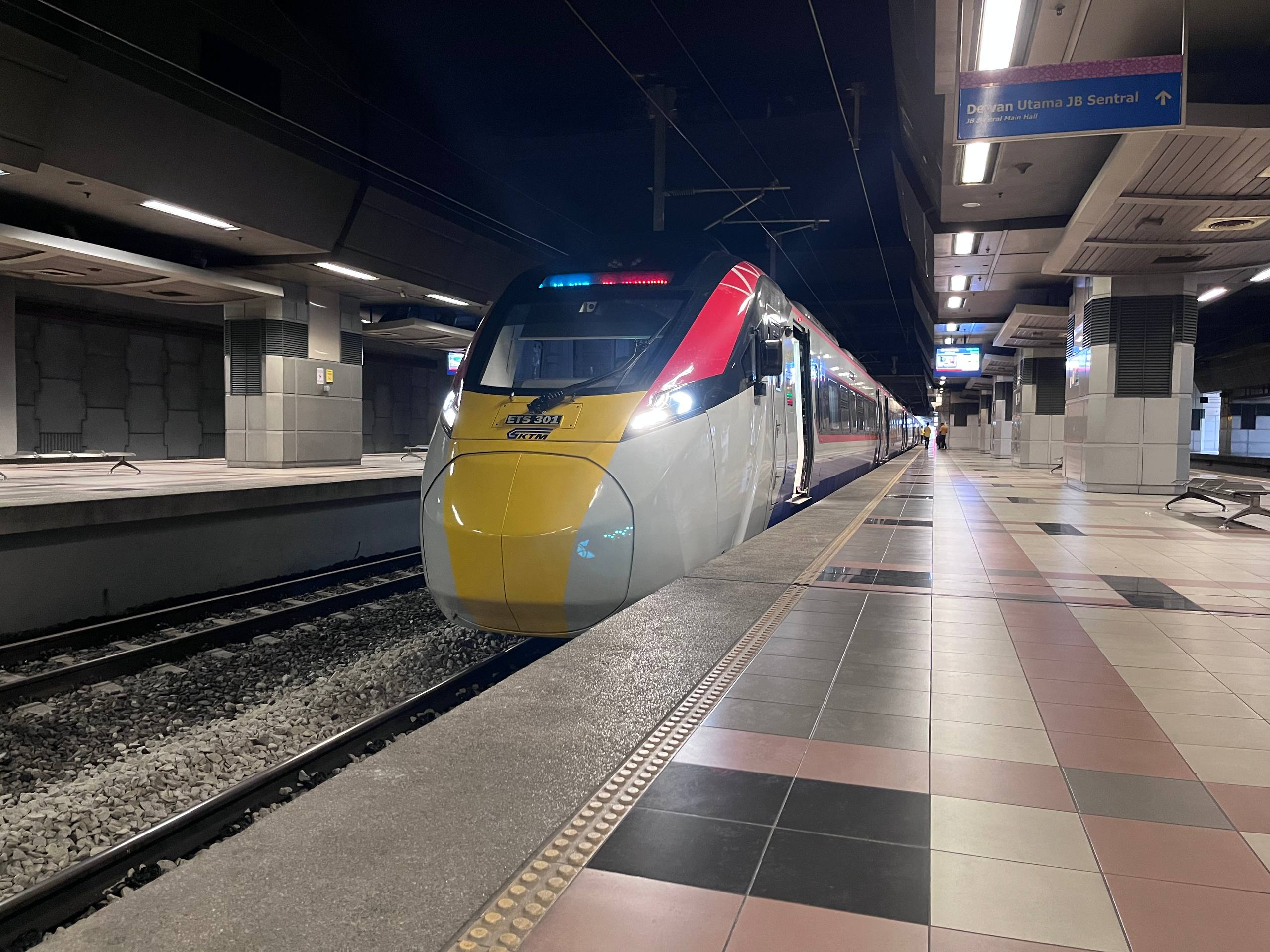
Each time I travelled up the southern line, I watched as modernisation slowly crept in. Temporary stations. New tracks. Spanking new stations. Electrification, and finally, new trains.
After more than eight years of gradual change, it finally happened. I hopped on a new ETS3 train out of JB Sentral for a short ride for the first time, and it felt almost surreal. The new opening was marked with mainstream media coverage, merchandise sales, lots of fanfare and even a drive by the Sultan.
But beneath the mainstream coverage and the fanfare lies a very interesting story about the towns in between, as well as how the project became what it is today.
The real benefits
While most people have talked about the service being a game changer for travel to KL, the most benefits reaped can be seen in the stops in between, something that I see is less talked about.
The new railway alignment mostly follows the old line, cutting costs since little to no land acquisition was needed. It’s posed more of an upgrade compared to a new line anyway. This means that for most of the route, it deviates from the North-South Highway, which follows closer to the west coast, and thus has a different catchment area compared to the highway.
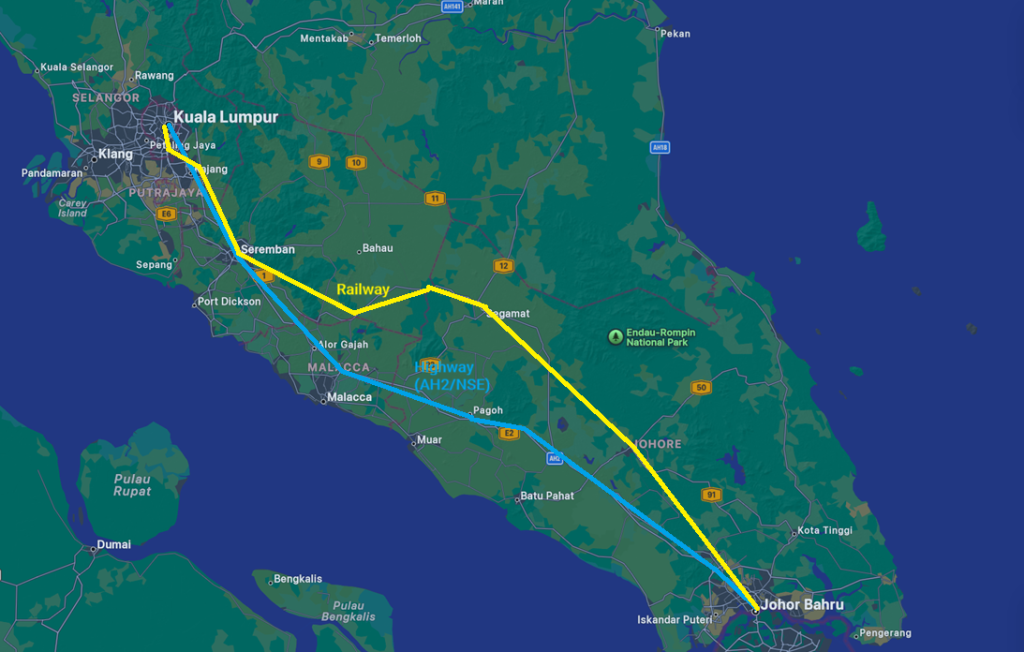
So while there are less time savings for full stretch to KL, towns like Segamat and Kluang benefit with savings of nearly over an hour, since motorists have to exit the highway and continue on local roads to their destination, meaning that trains are now the fastest way to the capital and down south.
| Place | ETS travelling time (from JB Sentral) | Diesel (ERT/ES) travelling time (from JB Sentral) | Car travelling time (from JB Sentral) |
| Kempas Bahru | 6mins | 18mins | 35mins |
| Kulai | 18mins | 46mins | 55mins |
| Layang Layang | 31mins | 1h12mins | 1h15mins |
| Rengam | 39mins | 1h29mins | 1h30mins |
| Kluang | 52mins | 2h12mins | 1h50mins |
| Paloh | 1h7mins | 2h43mins | 2h10mins |
| Bekok | 1h17mins | 3h3mins | 2h20mins |
| Labis | 1h27mins | 3h27mins | 2h30mins |
| Segamat | 1h44mins | 4h8mins | 3h |
Within Johor Bahru, Kempas Bahru and Kulai also see significant time savings. Trains cut through the notorious jams within Johor Bahru, making them up to 6x faster than the road option. This service has also attracted a small population of commuters heading into JB Sentral.
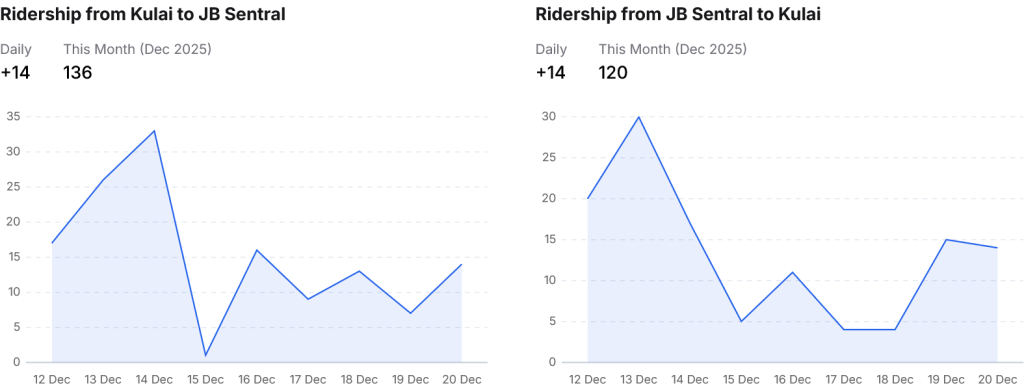
Noticeably, the stretch from Kluang to JB Sentral has also seen many passengers. Kluang has been marketed as a day trip destination, and with travel times under an hour, it’s looking like the train had been the preferred choice for many.
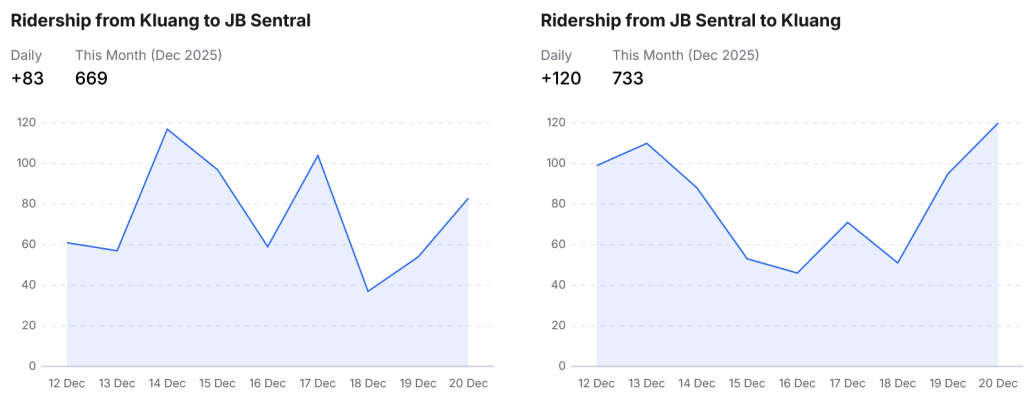
This is also not to say passengers travelling to KL won’t see benefits; buses already take 40 minutes longer than the fastest ETS train, and have less amenities, and are prone to jams.
A whole new railway
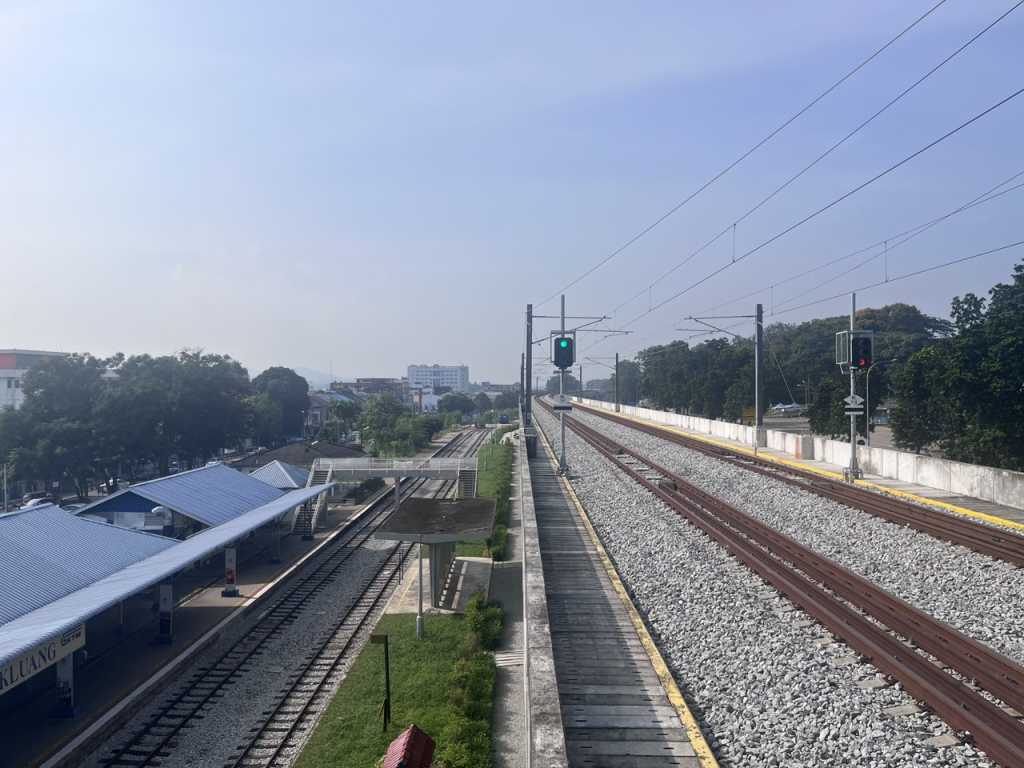
What people may not realise by just travelling on this line was the amount of work put into this project. It feels like they pretty much built a whole new railway.
Tracks were completely rebuilt to go above ground, relinquishing the need for level crossings, allowing speeds to go higher. This also helps during floods, which commonly disrupt services in the East Coast, where tracks are much closer to ground level. They were also constructed with fewer curves, so trains can reach higher speeds.
Entire new stations needed to be constructed. Previous stations were simply not compatible for the new trains, though some have been preserved in museum form. To construct these new stations, KTM demolished many old stations, and temporary stations had to be constructed while the old stations closed and the new stations took their place.
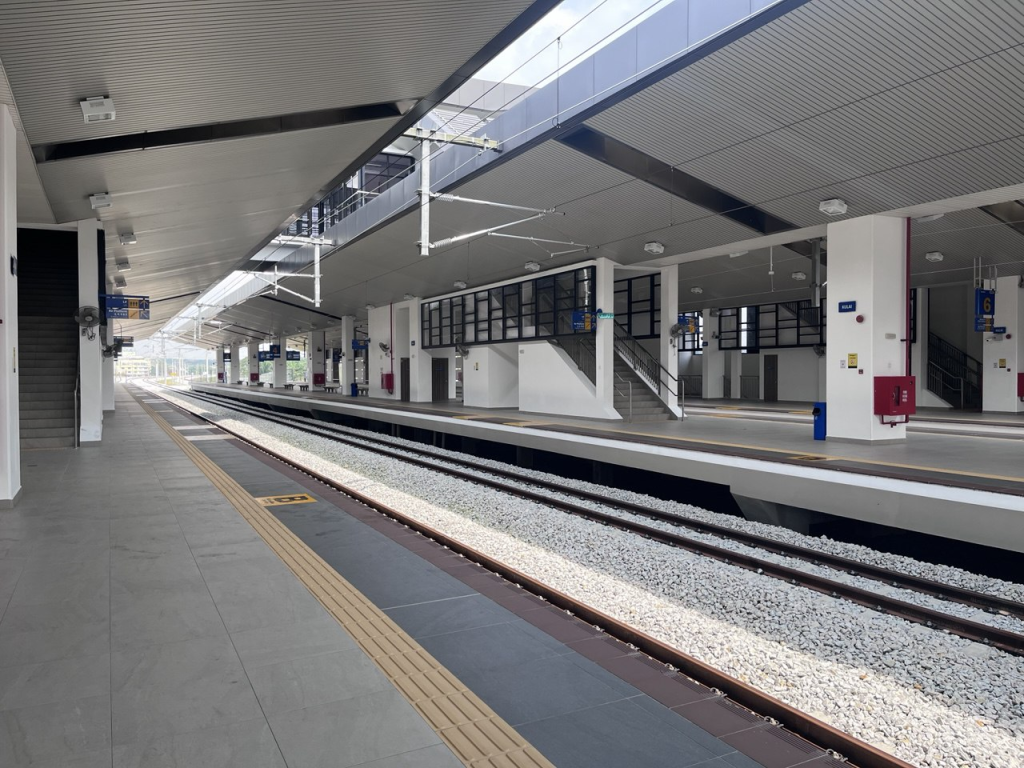
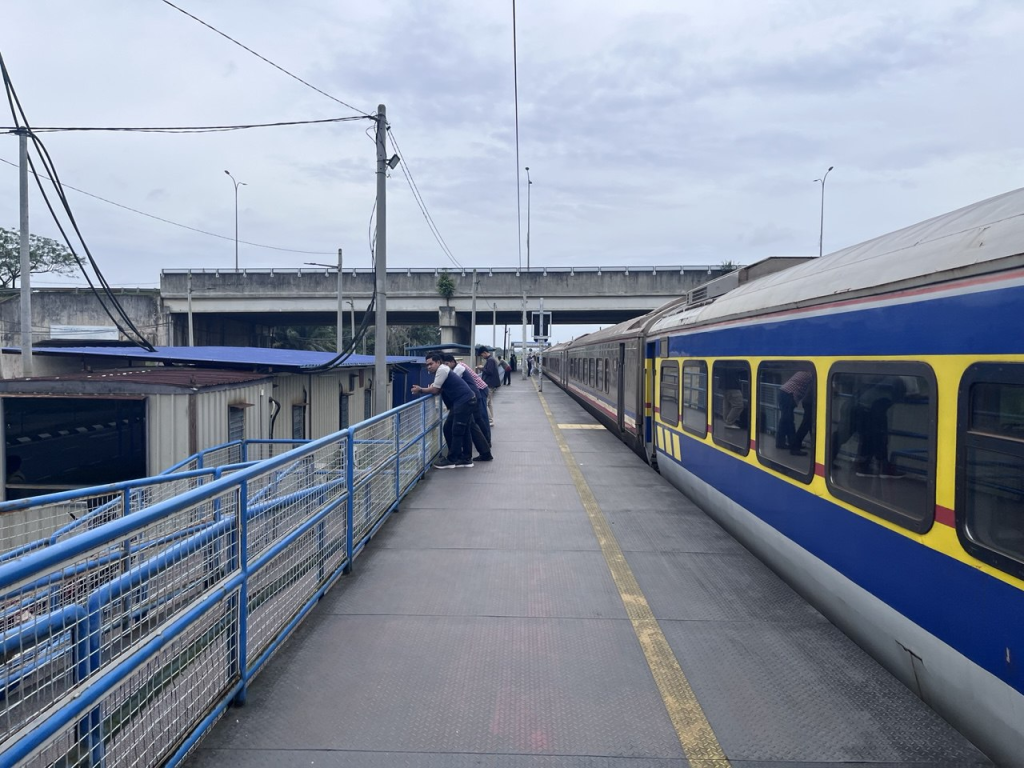
New signalling systems that allowed higher speed operations also needed to be tested and integrated, since the previously used Electric Token Block systems wouldn’t work on the new line as they are meant for slower, single track operation. Electrification of course had to happen to support the new trains.
A brand-new depot had to be built up too — The Kempas Bahru ETS rail depot stables and maintains lots of the new rolling stock that is used to run the new extension.
So much has changed that it’s hard to imagine how the railway previously looked like ten years ago.
It will get faster
Two things are currently slowing down the train from achieving its fullest potential — the large amount of intermediate stops, as well as the Klang Valley Double Tracking Project (KVDT).
When competing with other modes of transport, people especially value the aspect of time, an area of which where this train can rival air travel. As tested by Berita, when you include travelling times from the airport to the city centre, as well as the time needed to clear security at the airport, the total journey of the train comes very close to flying, and it’s not impossible to further close this gap.
Currently, all trains regardless of the tier of ETS class stop at all stops along the new southern section, even though some are very underutilised. Its easy to see which stops KTM should choose to skip if they decide to run faster services. Slower services such as the ETS Gold can then serve the lesser used stations, speeding up travel time for the majority. KTM also plans to introduce commuter services, though the details aren’t exactly clear yet.
| Place | Number of ETS passengers |
| Johor Bahru | 9526 |
| Kempas Bahru | 1332 |
| Kulai | 1046 |
| Layang Layang | 76 |
| Rengam | 110 |
| Kluang | 2510* |
| Paloh | 269* |
| Bekok | 140* |
| Labis | 542* |
| Segamat | 4294*^ |
*These stations have had additional train services which continue onto Padang Besar since September 2025.
^This station has abnormally higher numbers, since it was formerly the transfer point from ETS services to Ekspress Selatan services since Q2 2025. Its worth to note only 23 people rode from JB Sentral to Segamat within the specificed timeframe.
The media train that travelled nonstop from Kuala Lumpur (old) to Kempas Bahru (one stop to JB Sentral) on Dec 11 managed to complete the trip in 4 hours, despite making several intermediate operational stops. It’s not hard to see the potential time savings, especially when you consider the next factor; the KVDT project.
The area leading up towards Kuala Lumpur, known as the Klang Valley, has extremely heavy rail traffic, seeing commuter, freight and intercity services. Couple this with ageing tracks, signalling systems and stations, and you can see why KTM wants to upgrade the area with the KVDT project.
The KVDT currently reduces speeds around the Klang Valley, since there are ongoing works to reduce ageing tracks and outdated signalling systems in the area. This means that some sections are running at reduced frequencies, sometimes at single track. Work is expected to end around 2029, although we know how targeted completion dates in Malaysia usually go. (this ETS service was meant to be ready 5 years ago)
Once the KVDT project is completed, trains can then run out of Kuala Lumpur at faster and higher speeds, without waiting for other trains to pass.
Crossing the causeway

KTM has noted that a sizeable chunk of ETS riders are foreigners. On the maiden journey from JB to KL, 28% of the passengers were non-Malaysian. Most of these were Singaporeans who had likely crossed over the causeway to ride. But what about having the train complete the final kilometre into Singapore?
While the current plan is for travellers to take the RTS over to complete the journey once it opens, the idea of extending the electric rail service down south had floated around during the 1990s. But today, owing to land agreements, the last KTM service to Singapore will likely run in 2027.
Proper discussions actually happened, including proposed alignments where the train could end up. Places like Suntec City were proposed, as well as an underground tunnel section closer towards the city.
But ultimately these plans were shelved because the LTA deemed overhead line equipment (OHLE) ‘unsuitable for the city’, citing issues to future developments and a safety risk. KTM also could not accommodate these plans, since to change electrification methods just for the last 20km into Singapore wasn’t worth it.
It’s also important to note that OHLE allows faster running speeds compared to third rail, which is how most MRT lines in Singapore are powered.
However, LTA’s claims don’t exactly hold till today, since they decided to build the North-East Line with OHLE, and are currently building the Cross Island Line with OHLE too. I don’t imagine they are saying these MRT lines are ‘unsafe’ to Singaporeans now right? Other cities like London and Tokyo also have OHLE along their suburban services, which don’t see any issues.
Still, even without the extension to Singapore, the ETS coupled with the RTS link will be my preferred choice in travelling up to Peninsular Malaysia.
Despite its countless delays and the long wait, this project has finally put rail on the radar for travellers, as the faster, safer and affordable option. And with faster services on the way, it will only get better.
Stay tuned for the Part 2 of this blog series, where I take this train up to KL! Join my channel for updates!
The blog ‘From the Red Line’ has excellently covered the topic of the ETS extension to Singapore in great detail, of which you can read more here.
Leave a Reply